English
 Español
Posted on 19 Oct 2026
Korean skincare is known around the world for providing stunning results: clear complexions, glass skin, and an overall younger appearance. In recent months, a new Korean skincare treatment has been growing in popularity: XERF. Clinical studies have proven that this procedure is safe and extremely effective. With no downtime and fully customizable treatments, it’s no surprise that interest in XERF is skyrocketing. Learn more about how XERF skin tightening works, how it compares to similar procedures, and what you can expect during treatment.
What Is XERF?
XERF, which stands for eXperience Exponential RF, is a non-invasive skin tightening treatment that uses radiofrequency (RF) energy to heat the tissue under the skin and provide a firmer, smoother appearance. It was developed in South Korea, and it’s the world’s first multifrequency monopolar RF system. That means that it uses two different frequencies (6.78 MHz and 2 MHz) to target skin at different depths.
The dual-frequency technology is what makes XERF different from other radiofrequency treatments. It has shallow, middle, and deep settings, so providers have more control over where the energy is delivered.
Whereas RF microneedling uses needles, XERF delivers this energy without using needles or breaking the surface of the skin. It also doesn’t resurface your skin like laser treatment does. Because it’s so noninvasive, it can provide dramatic results without requiring significant downtime.
How Does XERF Radiofrequency Skin Tightening Work?
As we get older, our skin doesn’t produce as much collagen, and the collagen we already have starts to change. As a result, our skin becomes less firm and we can even experience sagging in parts of the face.
XERF uses controlled radiofrequency energy to heat collagen-rich tissue beneath the skin. The 6.78 MHz frequency produces more localized heating, and the lower 2 MHz frequency gives broader, deeper heating. Using the two frequencies together allows XERF to target your skin at different depths.
The heat from the frequencies triggers changes in your collagen structure. Research on XERF shows that it immediately thickens and shortens your collagen bundles, and the RF-induced tissue remodeling keeps happening for weeks. Most patients see noticeable results right after their treatment, and they continue to see improvements develop over the next several weeks.
What is XERF Used For?
XERF is typically used to tighten loose or lax skin and restore firmness to areas that have started to show signs of aging. Since the treatment can be customized to deliver energy at different depths, your provider can adjust XERF based on what area is being treated and what changes you’re hoping for.
Skin Concerns XERF Can Treat
XERF treatment can be a good option if you’ve started to notice mild to moderate skin laxity but you’re not at the point where you want to consider surgery. It can be used to improve concerns like:
- Loose or sagging skin
- Loss of firmness and elasticity
- A softening jawline
- Early jowling
- Sagging along the lower face and neck
- Age-related changes to your facial contours
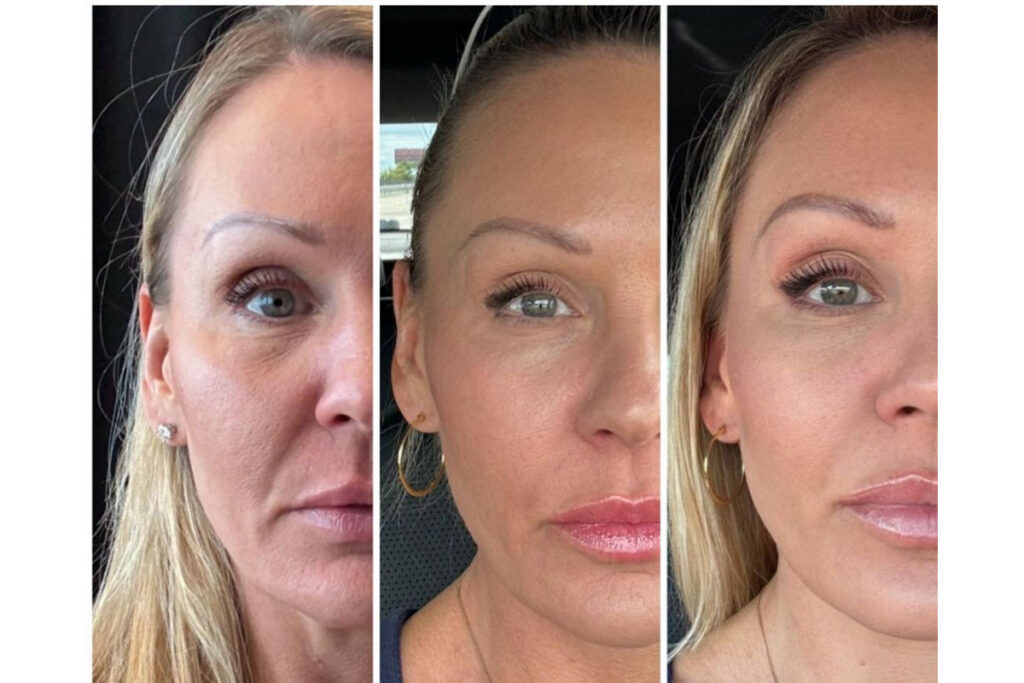
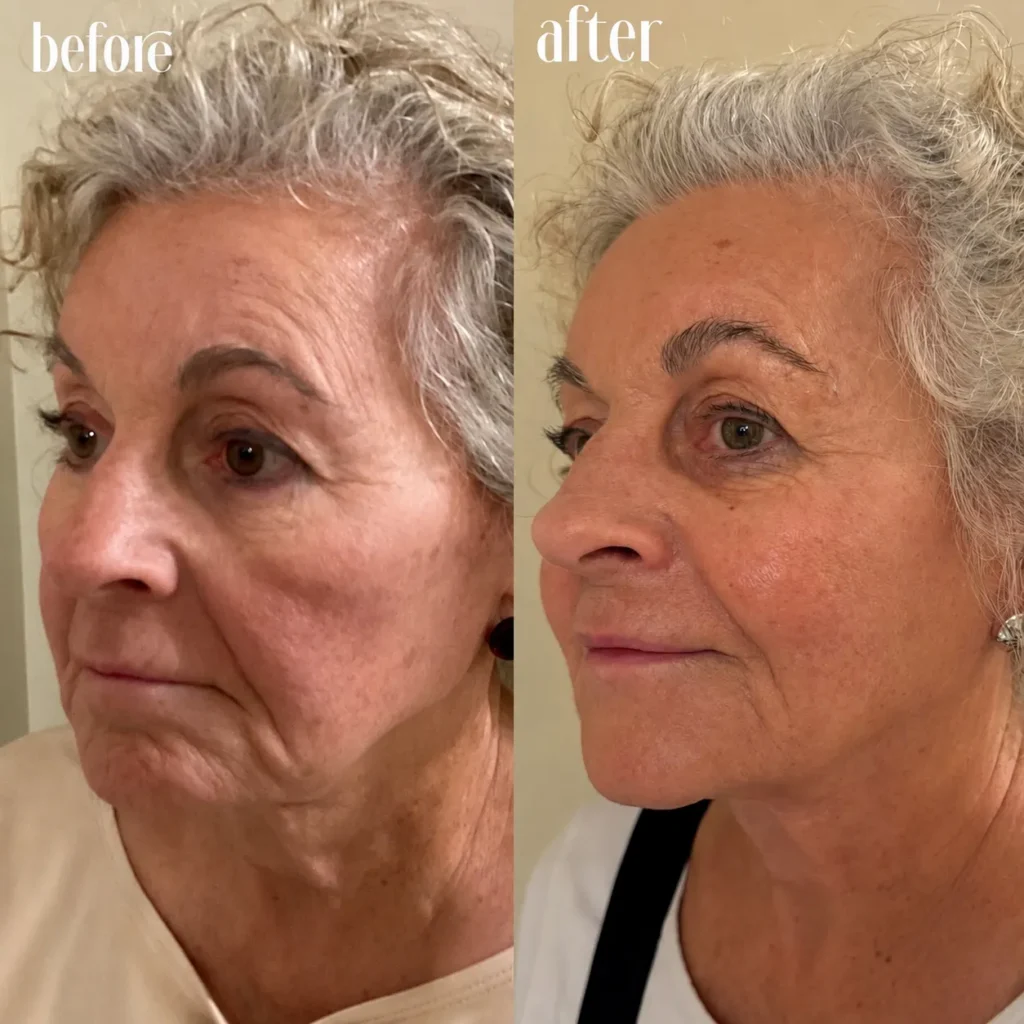
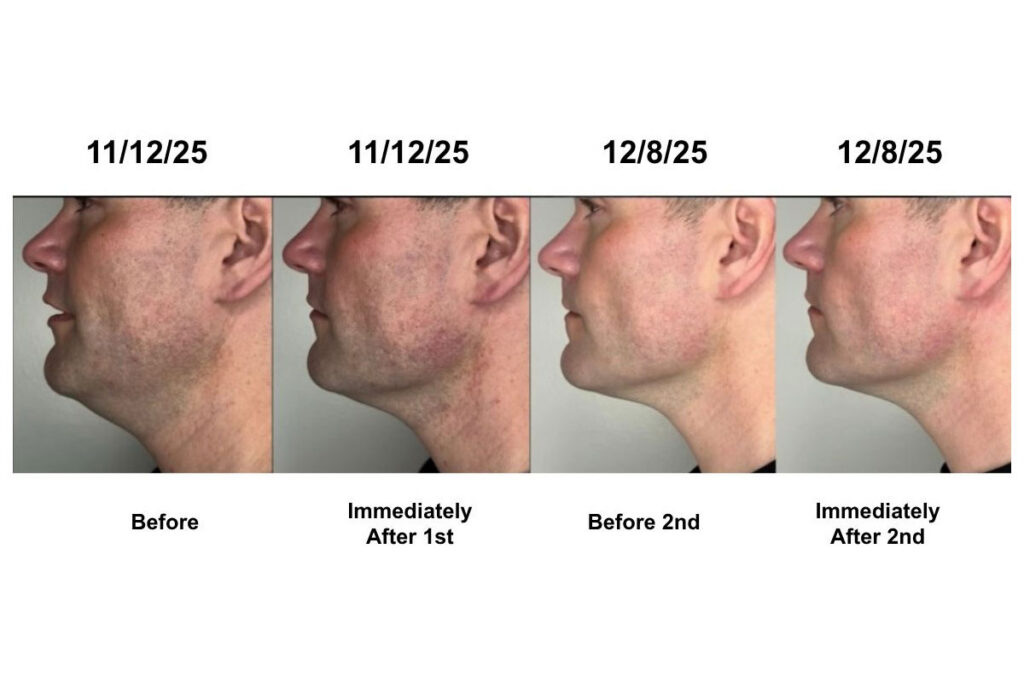
Clinical research on XERF has shown improvements in facial laxity, including tightening along the jawline and lower face and smoothing of neck wrinkles. These improvements can progress over weeks.
Dr. Neaman talks more about how XERF technology is used in the video below.
Areas XERF Can Treat
- XERF for face: XERF can be used across the face to improve firmness and address areas where your skin looks less supported.
- XERF for jawline: Your jawline is especially prone to sagging as you age. XERF can tighten the lower face and improve the appearance of early jowling.
- XERF for neck: Loose neck skin and neck wrinkles can make you look older, even if your face still looks young. XERF can tighten this lax skin.
- Body**: Depending on your concerns and your provider’s treatment protocol, XERF may be used for body skin tightening, especially after losing weight.
Ideal Candidates for XERF Skin Tightening
People starting to notice loose skin on their face may wonder if XERF could help give them a more youthful appearance. There are a few factors to consider if you’re wondering whether XERF is right for you.
First, there’s no specific age that makes someone a good candidate for XERF treatment, because two people can be the same age and have different levels of skin laxity, volume loss, and sun damage.
In addition, if you’re worried about the degree of loose skin you’re seeing, you may believe that XERF can’t help you get the results you want. The only way to know for sure is by talking with a provider to see if this non-invasive skin tightening is a good fit, or if you might be a good candidate for a more extensive treatment.
What XERF Can– And Can’t– Do
XERF can do wonders for loose skin, but it’s important to have realistic expectations about what results are possible.
XERF works best for mild to moderate skin laxity. This means things like some sagging, a less defined jawline, or a general loss of firmness.
XERF cannot restore lost facial volume like fillers or Sculptra, relax expression lines like Botox, or resurface damaged skin like a CO2 laser. And while it’s sometimes referred to as a non-surgical facelift, XERF can’t reposition significantly sagging facial skin like a facelift or neck lift surgery can.
The results that XERF can provide are more subtle and gradual. The treatment can improve your skin and underlying tissues, but it won’t dramatically change your facial structure.
Comparing XERF To Other Skin Rejuvenation Treatments
XERF is one of several treatments that can help address age-related changes to your face and neck. Each one has its own focus, so understanding the different options can help you seek a treatment plan that addresses your unique concerns.
XERF Vs. RF Microneedling
XERF and RF microneedling both use radiofrequency energy to stimulate changes beneath your skin, but they deliver that energy differently. RF microneedling uses tiny needles to penetrate your skin and deliver heat at certain depths. XERF delivers radiofrequency energy through your skin’s surface– no needles required.
Both procedures work well to address mild skin laxity. However, the controlled micro-injuries created by RF microneedling make it useful for also treating concerns like acne scars, enlarged pores, and uneven texture.
XERF Vs. CO2 Laser
XERF and CO2 lasers work in really different ways and treat very different skin concerns. A CO2 laser removes controlled parts of the skin’s outer layer to trigger resurfacing and renewal. This might be a better fit if you’re worried about significant sun damage, deeper wrinkles, uneven texture, or acne scarring.
XERF Vs Injectables
Injectables address concerns that XERF skin tightening cannot, so the two kinds of treatment work well together.
Botox and Dysport relax the muscles that cause dynamic wrinkles, and dermal fillers restore volume in the targeted areas. Sculptra takes a more gradual approach, encouraging your skin to produce more collagen.
XERF can’t relax muscles or replace lost volume– only tighten and firm your skin. Patients often choose to combine XERF and certain injectables for a well-rounded approach to facial rejuvenation.
XERF Vs Surgery
You can see incredible results from XERF, but it can’t reproduce the results of a facelift or neck lift. Surgery physically removes excess skin and repositions deeper facial tissue, so it can help treat significant jowling, advanced sagging, and substantial loose skin.
For patients with early signs of aging, XERF offers a less invasive way to improve firmness and facial contours. For more advanced concerns, however, surgery can make a bigger difference than energy-based treatments.
What To Expect From XERF Treatment
One of the biggest advantages of XERF skin tightening is that you don’t have to do much to prepare or recover. Treatment happens in the office and can be customized to suit your aesthetic goals.
During Your Procedure
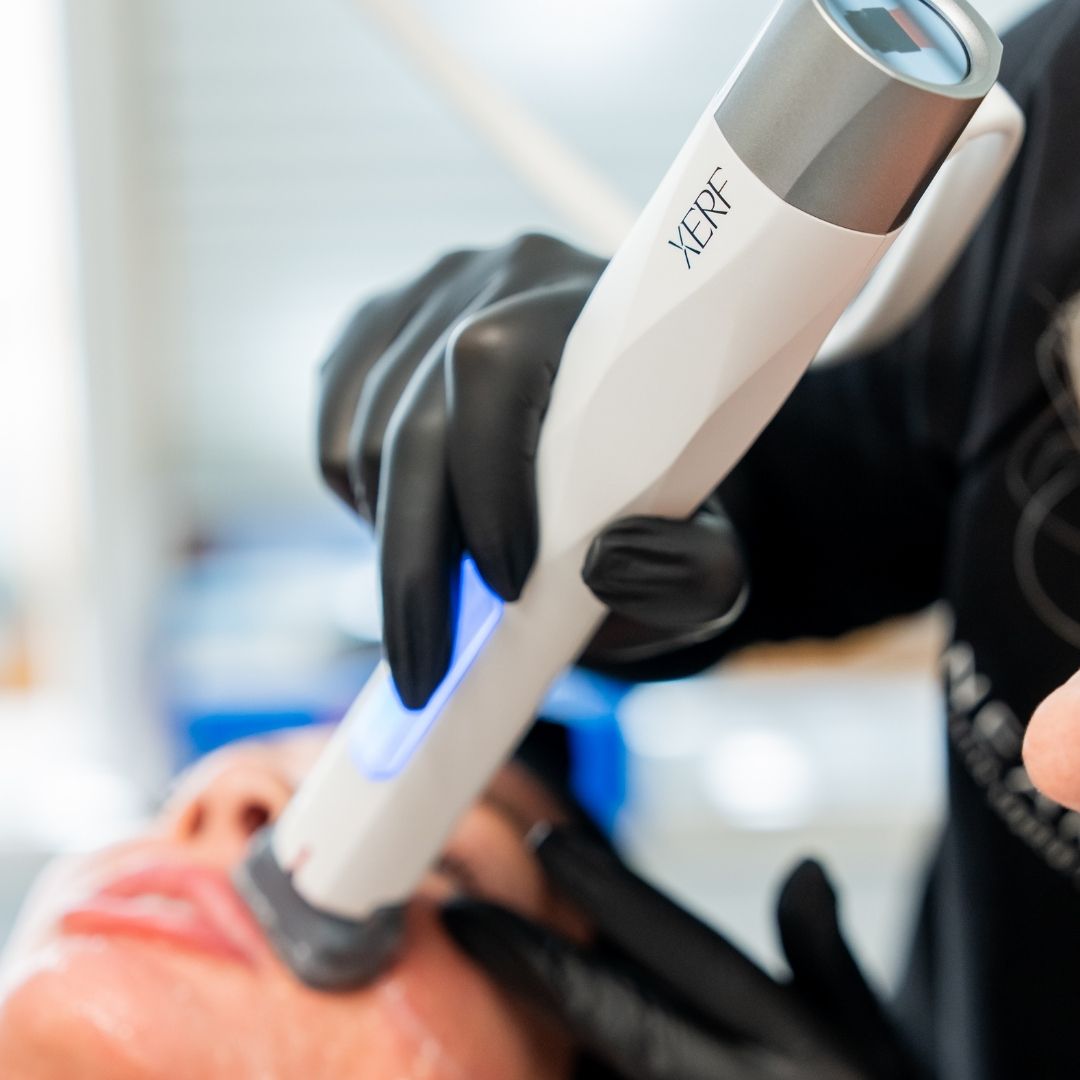
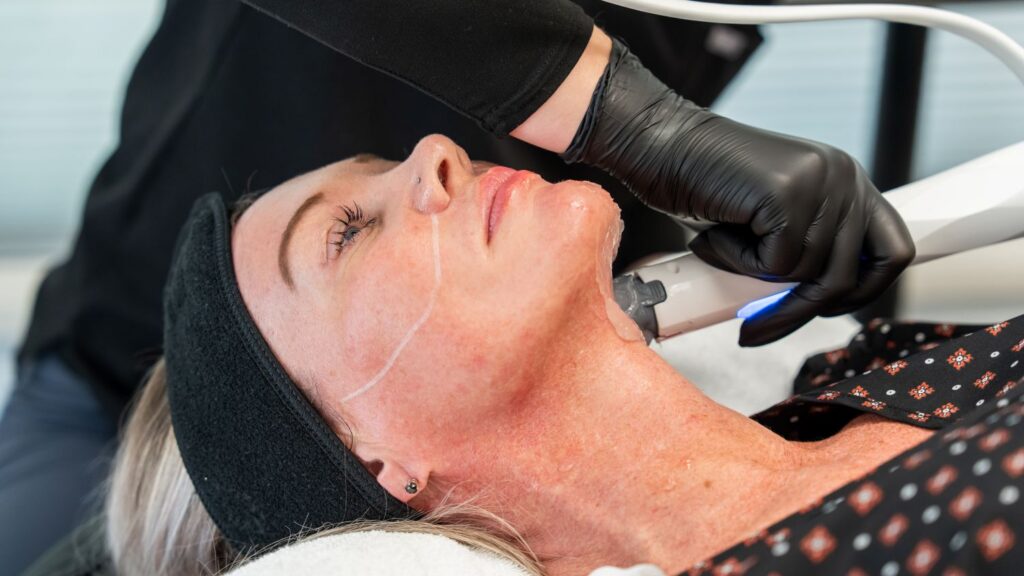
During the treatment, your provider will move the XERF handpiece across the treatment area, delivering controlled pulses of radiofrequency energy beneath the skin. It’ll feel warm as the energy heats the targeted tissue, but never hot or burning. It’s more like ‘you’re getting a warm stone massage.’ There’s an integrated cooling system that keeps the surface of your skin comfortable.
Treatment usually lasts 30-60 minutes. Your provider can adjust the depth and intensity of the RF energy throughout the session based on your anatomy, skin thickness, and treatment goals.
Immediately After Your Procedure
Since XERF doesn’t involve needles, lasering, or incisions, there’s little to no downtime involved. Your skin may feel a little warm or look a little flushed, but this only lasts a few hours. You won’t experience any lingering swelling or redness, and there’s no peeling or scar care required.
The night after your procedure, make sure to use warm (not hot) water to wash your face. Avoid applying active ingredients for a few days to avoid irritating your skin, and be diligent in your sunscreen use.
As Your Results Develop
You might notice a little tightening after your procedure, but improvements continue to appear as collagen remodeling takes place beneath the skin. It can take a few weeks or months for your full results to appear.
Learn More About XERF At A Consultation
With so many options for facial rejuvenation, choosing a treatment can sometimes feel overwhelming. During a consultation at Neaman Plastic Surgery & Medi Spa, your provider will evaluate your skin, discuss what you would like to improve, and determine whether XERF skin tightening is a good match for your goals. If another treatment—or a combination of treatments—would produce a better result, your provider can help you build a personalized plan.
Schedule a consultation to learn more about XERF and find out where it may fit into your long-term approach to skin rejuvenation.
Frequently Asked Questions
XERF is a non-invasive radiofrequency skin tightening treatment that uses two different RF frequencies that deliver controlled energy at different depths of your skin. It’s designed to improve skin firmness and laxity without using needles or incisions.
XERF technology is used to tighten and firm loose skin. It can help with early jowling, a softening jawline, loose neck skin, and other loose skin.
Yes, XERF skin tightening uses controlled radiofrequency energy to heat targeted tissue beneath the skin. The thermal effects support collagen remodeling, which can give you firmer, tighter-looking skin over time.
XERF is sometimes described as a non-surgical facelift because it can tighten lax skin and improve facial contours, without the need for incisions. However, XERF can only do so much, and patients looking for more dramatic results might want to consider a facelift.
XERF is usually used to treat the face, jawline, and neck. Some providers also offer treatment for certain areas of the body.
No. Unlike RF microneedling, XERF offers skin tightening without needles. It delivers radiofrequency energy through the surface of the skin.
Because XERF isn’t invasive, it’s designed to require no downtime. Most people can jump right back into their normal routine after the skin laxity treatment, but you’ll want to double-check with your provider about what you can expect.
XERF and CO2 laser resurfacing treat very different concerns. XERF can help tighten loose skin, while CO2 lasers resurface the skin and improve the appearance of wrinkles, sun damage, uneven texture, and acne scars. CO2 lasers also involve more downtime, but with XERF most patients can immediately resume their normal routine.
Both treatments use radiofrequency energy, but RF microneedling uses small needles to deliver energy beneath the skin and XERF is needle-free. RF microneedling can improve texture, pores, acne scars, and fine lines; XERF is focused on facial skin tightening and firming.
You may see some tightening after XERF treatment, but it can take weeks or even months to see your full results. The procedure encourages collagen remodeling, so it takes a while for collagen production to change the look of your skin.
There’s no hard and fast rule about the right number of treatments you’ll need. It depends on how much loose skin you have, the degree of skin laxity, the treatment area, and how your skin responds once you start treatment. During your consultation, your provider will talk to you about your goals and explain whether a single session or series of treatments would be best.