English
 Español
Recovering from blepharoplasty is often easier than many patients expect, but knowing what to anticipate can help you feel more confident throughout the process. While most swelling and bruising improve within the first couple of weeks, healing continues for several months as your eyelids settle into their final appearance. This guide walks you through each stage of recovery, from preparing for surgery to returning to your normal routine, so you know what to expect every step of the way.
If you’re interested in learning whether or not you’re a candidate for blepharoplasty, you can schedule a free consultation with our office. Financing is available through several different providers.
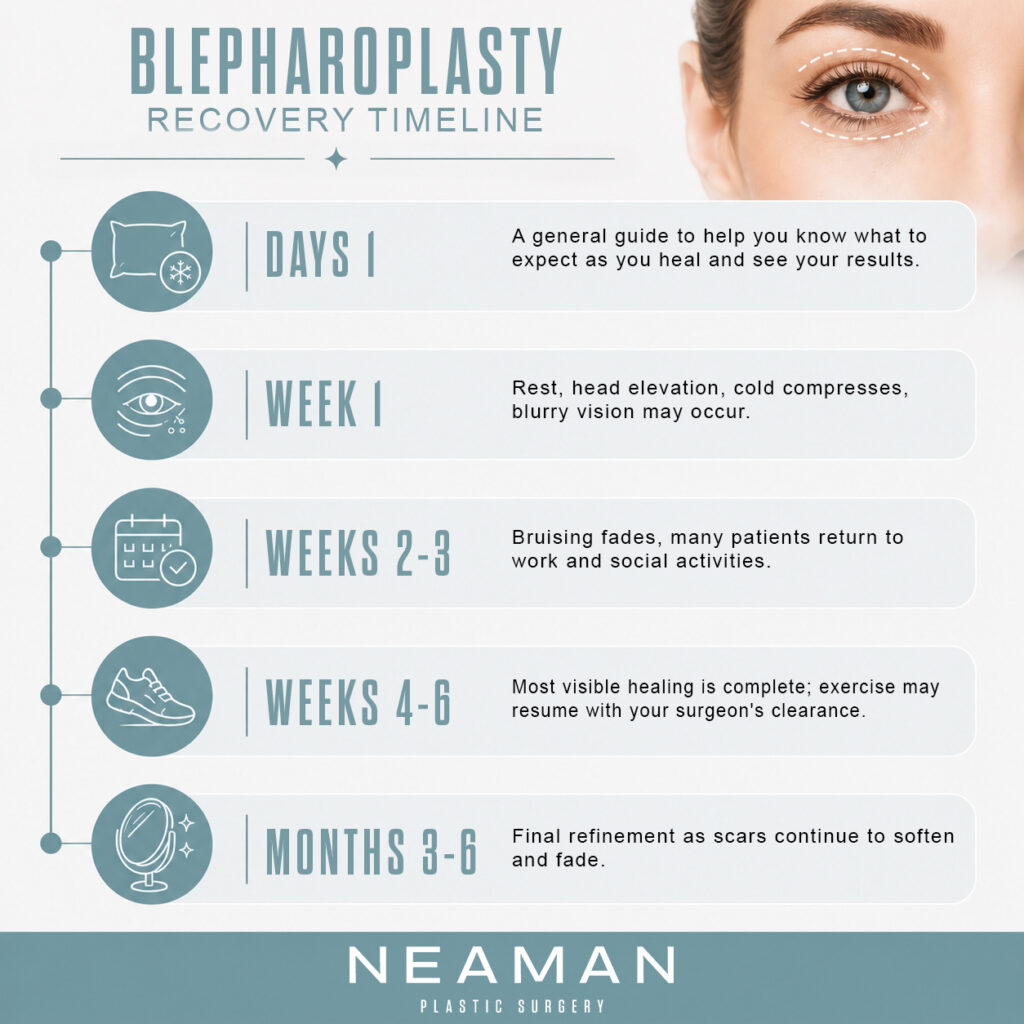
Blepharoplasty Recovery Timeline
| Recovery Stage | What You May Notice | What to Focus On |
| Day 1 | Tightness, swelling, watery eyes, blurry vision from ointment or swelling | Rest, head elevation, cold compresses, medication as directed |
| Week 1 | Bruising, puffiness, mild discomfort, light sensitivity | Rest, short walks, avoid rubbing eyes, limit eye strain |
| Weeks 2–3 | Bruising fades, swelling improves, residual morning puffiness | Gradual return to work and social activities |
| Weeks 4–6 | Most visible healing improves, incisions continue maturing | Resume exercise only after surgeon clearance |
| Months 3–6 | Subtle swelling resolves, scars soften and fade | Enjoy more refined, final-looking results |
Before Surgery
Taking the time to prepare yourself and your home for recovery will help you fully rest after your procedure and give your body the time it needs to heal.
What To Buy For Recovery
These essentials can make your blepharoplasty recovery more comfortable:
- Extra pillows or a wedge pillow to keep your head elevated
- Ice packs or reusable cold compresses
- Artificial tears or lubricating eyedrops
- Clean gauze pads
- Nutritious easy-to-prepare meals and snacks
- Sunglasses to protect your eyes outdoors
Go ahead and fill any prescriptions before surgery so that you have immediate access to your medication afterward.
What to Buy Before Eyelid Surgery
| Recovery Item | Why It Helps |
| Extra pillows or wedge pillow | Helps keep your head elevated to reduce swelling |
| Cold compresses | Can help manage swelling and comfort |
| Artificial tears | Helps with temporary dryness or irritation |
| Clean gauze pads | Useful for gentle care if recommended by your team |
| Easy meals and snacks | Allows you to rest without cooking |
| Sunglasses | Protects healing eyes from sun, wind, and light sensitivity |
| Prescriptions filled early | Ensures medication is ready when you get home |
| Audiobooks or podcasts | Helps reduce eye strain during early recovery |
How to Prepare Your Home
Plan to take it easy for the first several days after surgery.
- Create a recovery ‘nest’ with pillows, blankets, and easy access to water and medication.
- Place items you use frequently at waist or countertop level to avoid bending.
- Stock up on groceries and household essentials.
- Arrange for someone to drive you home and stay with you for the first 24 hours.
You’ll want to limit eye strain for the first few days of recovery, so download a few audiobooks or episodes of your favorite podcast.
Time Off Work
Most patients take 1-2 weeks off work after blepharoplasty. However, recovery timelines vary depending on the extent of your procedure and the visibility requirements of your job.
If your job requires minimal physical activity, you may feel comfortable returning sooner. If your job involves heavy lifting or frequent interaction with the public, you may need additional time off. Even after your physical discomfort is gone, bruising and swelling can remain visible for several weeks.
Eyelid Surgery Recovery Timeline
Day 1
The first 24 hours are typically when swelling begins to develop. Your eyelids may feel tight, sore, or watery, and your vision may be slightly blurry due to ointments and swelling.
- Rest with your head elevated.
- Apply cold compresses as needed.
- Take your medication as prescribed– don’t wait too long to take pain medication.
- Take short walks around the house to promote circulation.
- Avoid rubbing your eyes.
Have a responsible adult with you for the first 24 hours.
Week 1
Bruising and swelling are usually most noticeable during the first week. Your eyes may look uneven– this is completely normal.
During the first week of recovery, give yourself plenty of time to rest. It’s important to take short walks, but don’t do anything more strenuous than that.
Common symptoms include:
- Bruising around the eyes
- Puffiness
- Mild discomfort or tightness
- Temporary dryness or increased tearing
- Sensitivity to light
Weeks 2-3
By this point, your bruising and swelling will have faded significantly. Most people feel comfortable going back to work and social activities.
You’ll look much better, but some residual swelling may still be present, especially when you wake up in the mornings.
Weeks 4-6
Most of the visible healing is complete by weeks 4-6. Your incisions will continue to mature and become less noticeable.
Once your surgeon clears you, you’ll be able to return to more strenuous activities like exercise.
Months 3-6
Subtle swelling continues to resolve and scars continue to soften and fade. By this stage, you have a clear picture of your final results. Your eyes should appear brighter and more refreshed, and your scars should be hard to detect.
Eyelid Surgery Recovery Tips
Sleeping Positions
During the first few weeks, sleep with your head elevated on a few pillows, or in a recliner. Elevation helps minimize swelling and can improve discomfort.
Try to sleep on your back and avoid sleeping face-down, since this puts pressure on your recovery eyelids.
Returning to Work
Most patients can return to desk jobs within 7-14 days. However, jobs that involve a lot of physical activity may require you to be out longer.
Bruising can last a few weeks, so if you are face-to-face with a lot of people, you may not feel comfortable going back to work until most of the bruising has faded.
Exercise
Light walking is encouraged to support healthy circulation. If you go for walks outside during the first few weeks, wear sunglasses and a hat to avoid exposing your recovering eyelids to direct sunlight.
Avoid running, weightlifting, and any other high-intensity workouts. You should be able to return to your full workout routine 4-6 weeks after surgery.
Returning to Activities After Eyelid Surgery
| Activity | Typical Timing | Important Notes |
| Short walks | Day 1 or as directed | Keep it gentle and avoid strain |
| Driving | Several days to 1 week | Do not drive while taking prescription pain medication or if vision is blurry |
| Desk work | 7–14 days | Depends on swelling, bruising, and comfort |
| Eye makeup | Often 10–14 days | Wait until incisions are healed and surgeon clears you |
| Social events | 1–2 weeks or longer | Bruising may still be visible |
| Strenuous exercise | Usually 4–6 weeks | Resume only after surgeon clearance |
| Full results | 3–6 months | Subtle swelling and scar fading continue over time |
Emotional Recovery
Recovering from blepharoplasty can feel like a roller coaster. You may go from excitement about your results to frustration that you’re still experiencing swelling and bruising.
During the first few weeks, many patients worry that they don’t look like themselves or that their eyes are healing unevenly. All of this is a normal part of the recovery process. Give your body time to heal before you judge your final outcome.
Scar Care
As you recover, keep the surgical area clean and moisturized. Once your incision has closed and started to heal, you may get the go ahead to begin scar treatment. Silicone gel is usually the preferred method for scar treatment, as it forms a protective barrier over the skin to lock in moisture and promote healing.
When to Call Your Surgeon
Some swelling, bruising, discomfort, and temporary vision changes are a normal part of blepharoplasty recovery. However, certain symptoms may indicate a complication and should be reported to your surgeon right away.
Contact your surgeon if you experience:
- Increasing redness, warmth, swelling, or drainage around the incision sites
- A fever above 101°F
- Pain that is worsening or not controlled with medication
- Significant bleeding that does not improve with gentle pressure
- Sudden or severe swelling on one side
- New or worsening vision changes
- Persistent nausea or vomiting
- Symptoms of infection, such as pus or foul-smelling drainage
Seek emergency medical attention or call 911 if you develop chest pain, shortness of breath, or any sudden loss of vision.
When in doubt, it’s always better to contact your surgical team. They can help determine whether your symptoms are a normal part of healing or if you should be evaluated. We are always happy to answer questions and help relieve any worries you have about healing.
Frequently Asked Questions
How long does swelling last after eyelid surgery?
Swelling improves significantly within the first two weeks, but residual swelling can last for a few months. Your final results will be visible 3-6 months after surgery.
When can I drive?
You should be able to drive within several days to a week after blepharoplasty. It’s not safe to drive while you’re taking prescription pain medicine or if your vision is affected by swelling.
When can I wear makeup?
Most patients can begin wearing eye makeup 10-14 days after surgery, once the incisions have healed enough. Your surgeon will let you know when it’s safe to apply makeup around your eyes.
Do you lose your eyelashes after upper blepharoplasty?
No, upper blepharoplasty doesn’t typically cause permanent eyelash loss. The incision is usually placed in the natural crease of the upper eyelid, which is above the lash line, so it doesn’t affect the eyelash follicles.
Some people experience temporary thinning or shedding of eyelashes near the incision, but this is uncommon and heals over time.
Why can’t you watch TV after blepharoplasty?
You don’t have to completely avoid TV after blepharoplasty, but limiting screen time for the first few days can aid in a quick recovery. Watching TV, scrolling on your phone, or reading on a Kindle can reduce how often you blink and worsen dryness and irritation.
Can I combine my blepharoplasty with other procedures?
Yes, blepharoplasty is often combined with other cosmetic procedures for a more comprehensive facial rejuvenation. Common combinations include brow lifts to address sagging eyebrows, laser skin resurfacing to improve skin texture and fine lines, and facelifts to treat aging in the lower face and neck. Some patients also choose to combine eyelid surgery with non-surgical treatments such as Botox or dermal fillers.