English
 Español
Posted on 07 Jan 2025
Updated July 27, 2026
If you’ve set a goal to lose weight before body contouring surgery, one key thing to keep in mind is that there is no exact amount of weight that doctors recommend you lose. The more important thing is getting as close to your goal weight as possible, then maintaining that weight for an extended period of time.
Weight Loss Before Body Contouring: How Much Weight Do You Need to Lose?
One of the most common questions people ask when they’re considering body contouring surgery is, “How much weight do I need to lose first?”
It’s an understandable concern. After losing weight, especially when it’s a large amount, some people may be left with loose or sagging skin that is almost impossible to get rid of, even with diet and exercise. Body contouring procedures help address this skin and improve your overall body shape so you can enjoy results like these:
The good news is that there isn’t one ‘magic’ number that tells you when you’re ready for surgery. Instead of focusing on a number on the scale, plastic surgeons typically look at:
- How close you are to your goal weight
- Whether you reached your ideal weight before surgery
- How long your weight has been stable
- Your overall health and medical history
- The type of body contouring procedure you’re considering
It’s important to know that body contouring isn’t intended to help you lose weight. It is meant to help reshape areas of your body once you’ve gotten close to your target weight.
Your Weight Stability Matters More Than Your Actual Weight
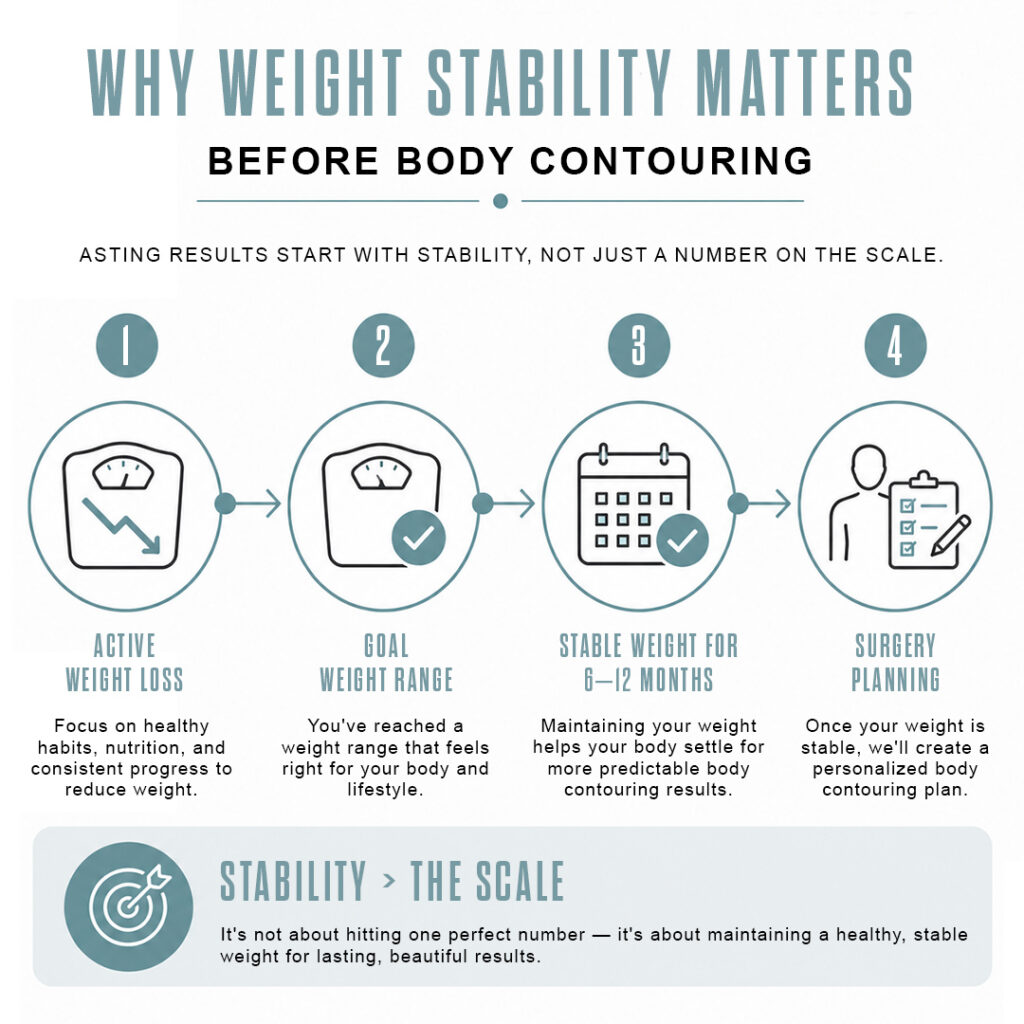
For most patients, maintaining a stable weight is more important than reaching a specific number.
Many plastic surgeons recommend keeping your weight stable for at least 6-12 months before body contouring surgery. This gives your body time to recover from weight loss, allows your loose skin to settle as much as possible, and makes it more likely that your results will be long-lasting.
If you continue to lose a significant amount of weight after your surgery, you may end up with more loose skin and unwanted changes to the contours your surgeon created. Reaching a stable weight before surgery helps you maximize your investment and avoid repeat procedures in the future.
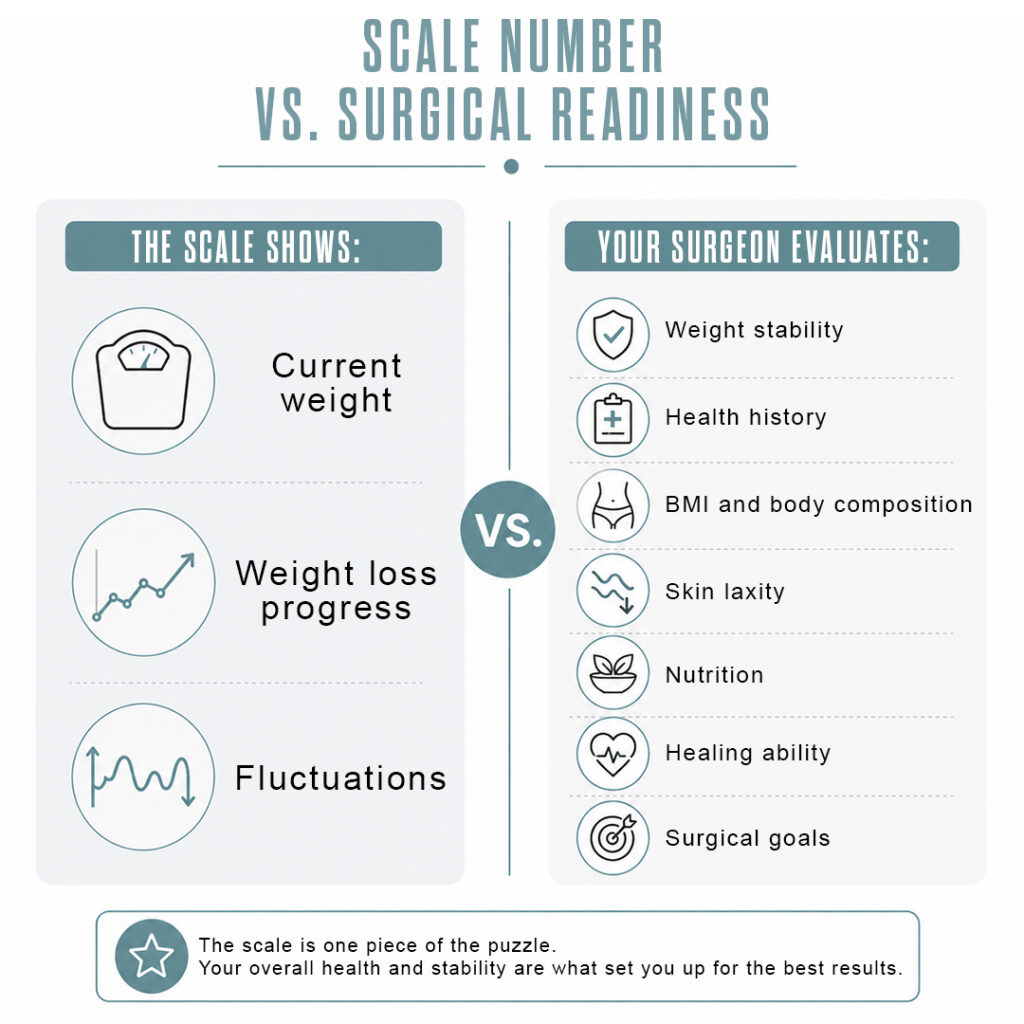
What Surgeons Look At Besides Weight
| Factor | Why It Matters |
| Weight stability | Helps protect long-term results |
| Goal weight | Shows whether you are close to your sustainable weight |
| BMI | Helps assess surgical and anesthesia risk |
| Medical history | Identifies conditions that may affect safety or healing |
| Nutrition | Supports wound healing and recovery |
| Skin laxity | Helps determine which procedure may be needed |
| Lifestyle habits | Smoking, activity level, and maintenance habits affect results |
| Procedure goals | Helps match expectations with surgical options |
BMI Is One Part of the Picture, But Not All Of It
When your surgeon is evaluating whether you’re a candidate for body contouring surgery, one factor they look at is your BMI.
However, because BMI doesn’t account for muscle mass, body composition, or fat distribution, it doesn’t always accurately reflect your overall health. A healthy patient with a lot of muscle can have a higher BMI, but someone with a BMI in the ‘normal’ range can have medical conditions that make them a risky candidate for body contouring.
Instead of relying solely on your BMI, your surgeon will also look at factors like:
- Overall health and medical conditions
- Surgical and anesthesia risks
- Healing capacity
- Lifestyle habits
- Whether you’re close to your long-term goal weight
BMI can help with surgical planning, but it isn’t the be-all end-all when you’re being evaluated for eligibility.
Body Contouring After Ozempic or Other GLP-1 Medications
About 1 in 8 adults in the US have used Ozempic, Wegovy, or other GLP-1s to support their weight loss endeavors, leading many to consider body contouring after Ozempic. Since these medications can produce impressive weight loss, a lot of patients end up with loose skin once they’re close to their target weight.
If you’ve lost weight with a GLP-1 medication, the same recommendations apply: wait until your weight has stabilized before you think about scheduling surgery. Patients considering a tummy tuck after weight loss from Ozempic see the best long-term results when they’re at a sustainable weight they can maintain.
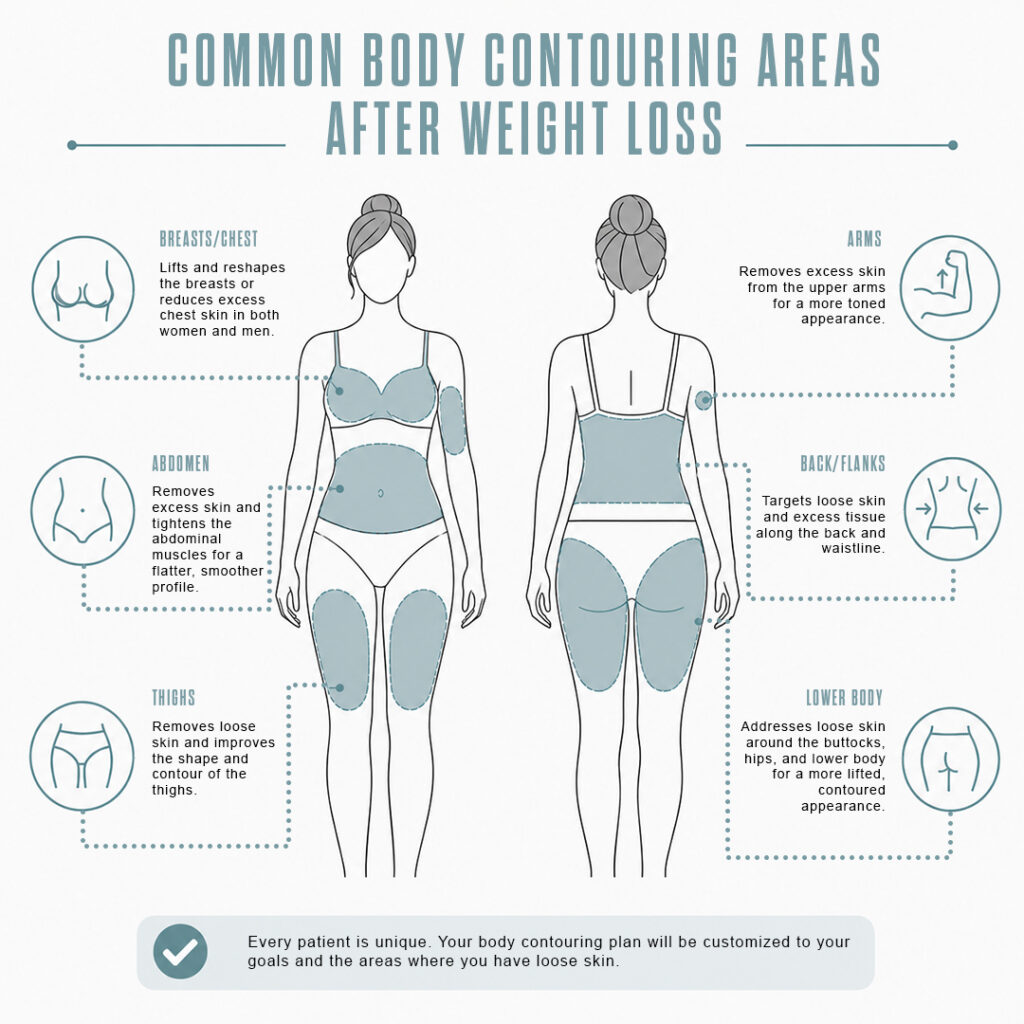
Common Procedures After Weight Loss
| Concern After Weight Loss | Procedure Your Surgeon May Discuss |
| Loose abdominal skin | Tummy tuck or lower body lift |
| Sagging breasts | Breast lift, augmentation, or breast lift with implants |
| Loose upper arm skin | Arm lift |
| Loose thigh skin | Thigh lift |
| Excess skin around lower body | Lower body lift |
| Localized stubborn fat | Liposuction, when appropriate |
| Multiple areas of loose skin | Staged body contouring plan |
Is Massive Weight Loss Different?
Patients who have lost 75-100 pounds or more often need a different surgical approach than people who experienced a more modest weight loss.
Massive weight loss usually leaves behind excess skin in multiple areas of the body. It’s not recommended to treat all of these areas at the same time because of the strain this puts on the patient and the length of the recovery. At the same time, splitting the body contouring treatment plan into too many procedures can drag treatment out.
During your consultation, your surgeon will help prioritize procedures that will have the biggest impact on your quality of life. They can work with you to design a treatment plan that safely addresses all of the excess skin you want removed, but it will probably involve multiple surgeries.
What Happens If I Lose More Weight After Body Contouring?
It’s okay to lose a little bit of weight after your surgery– this shouldn’t affect your results. However, if you undergo significant weight loss after body contouring, you could experience:
- New loose or sagging skin
- Changes in body proportions
- The possibility of needing revision surgery
Some patients who lose a large amount of weight after surgery end up scheduling revision procedures. While this shouldn’t be a problem, you’d probably prefer to avoid recovering from a second surgery. For this reason, it’s best to complete your weight loss journey before you move forward with body contouring.
When Should You Start Planning Body Contouring Surgery?
You don’t have to wait until you’ve maintained your target weight to schedule a consultation with a plastic surgeon.
Most patients start meeting with potential surgeons several months before they’re ready for surgery. This gives you time to discuss your goals, understand which procedures might be appropriate, and create a surgical timeline based on your weight loss progress so far.
If you already know you’ll be interested in a tummy tuck after weight loss, an early consultation can help you plan ahead so you’re ready when the time is right.
Am I Ready for Body Contouring Surgery?
The best way to decide if you’re ready for body contouring is through a personalized consultation with an expert at Neaman Plastic Surgery in Salem, Oregon. During your visit, your surgeon will evaluate your health, weight history, and goals to determine the safest and most effective treatment plan.
To schedule your appointment, book a consultation online or call us at 503-364-5033.
Frequently Asked Questions
Body contouring is best scheduled once you’ve completed your weight loss journey and maintained a steady weight for a while. Losing a significant amount of weight after your surgery will affect your results and lead to additional loose skin.
Yes, body contouring can be safe after weight loss injections or bariatric surgery once your weight has stabilized and your nutritional health is optimized. Your surgeon will evaluate your overall health, healing ability, and timing to determine when surgery is appropriate.
It’s normal for your weight to fluctuate a little bit. However, significant weight gain after surgery can impact your results.
It’s best to be as close to your goal weight as possible, and to keep that weight stable for 6-12 months. Many surgeons will consider you a good candidate if you’re within 10-15 pounds of a weight you can comfortably maintain.
No. Body contouring procedures are designed to remove excess skin and reshape your body after weight loss, not reduce your overall weight. While you may lose a few pounds from the tissue that’s removed, that’s not the direct purpose of the surgery.

Dr. Keith Neaman
Dr. Neaman is a board-certified plastic surgeon that specializes in surgical body contouring. He prides himself on being on the cutting edge of plastic surgery. He takes an informative approach to each consultation, and through open dialogue and communication, he helps his patients decide on a treatment plan that meets their needs.