English
 Español
Posted on 19 Jan 2026
Introduction
Weight loss medications like Ozempic have helped many people achieve significant, life-changing results. Originally created to help manage Type 2 diabetes, Ozempic is now well-known for its ability to help patients shed weight, often in a short amount of time.
While this can be exciting, rapid weight loss doesn’t always leave the skin enough time to catch up. Many patients find themselves dealing with a new challenge they weren’t expecting: hair loss, loose, sagging skin.
An “Ozempic makeover” is a customized surgical approach that focuses on removing excess skin and improving body contours after weight loss. Learn more about the procedure and if it might be a fit for you.
What is Ozempic and How Does it Support Weight Loss?
Ozempic is a prescription weight loss injection that belongs to a class of drugs known as GLP-1 receptor agonists, which work by regulating blood sugar levels and reducing appetite.
By slowing digestion and decreasing hunger signals, Ozempic can lead to steady, sometimes rapid weight loss, particularly when combined with lifestyle changes such as improved nutrition and increased physical activity. For many patients, the result is significant weight loss over a relatively short period of time.
While the numbers on the scale may be thrilling, this quick reduction in body mass may come with an unexpected side effect: quickly losing a large amount of weight can cause loose or sagging skin in areas like the abdomen, arms, thighs, breasts, or face.
Why Does Ozempic Weight Loss Cause Loose Skin?
Skin is incredibly elastic, but it has limits. When weight loss occurs gradually, the skin has more time to adapt and contract. Wth medications like Ozempic that accelerate fat loss, that process can be too fast for the skin to keep up.
Several factors influence how well your skin rebounds:
- Age: Natural collagen and elastin decline over time, reducing your skin’s ability to rebound.
- Genetics: Skin elasticity varies from patient to patient.
- Skin quality: Poor skincare habits, smoking, and sun exposure decrease your skin’s laxity.
- Speed and amount of weight loss: Faster and/or more significant weight loss often leads to more visible skin laxity.
When weight loss happens gradually, your skin has more opportunity to adjust. With medications like Ozempic, weight loss can occur faster than traditional methods, making loose or deflated skin more noticeable in areas like your abdomen, arms, thighs, breast, and face.
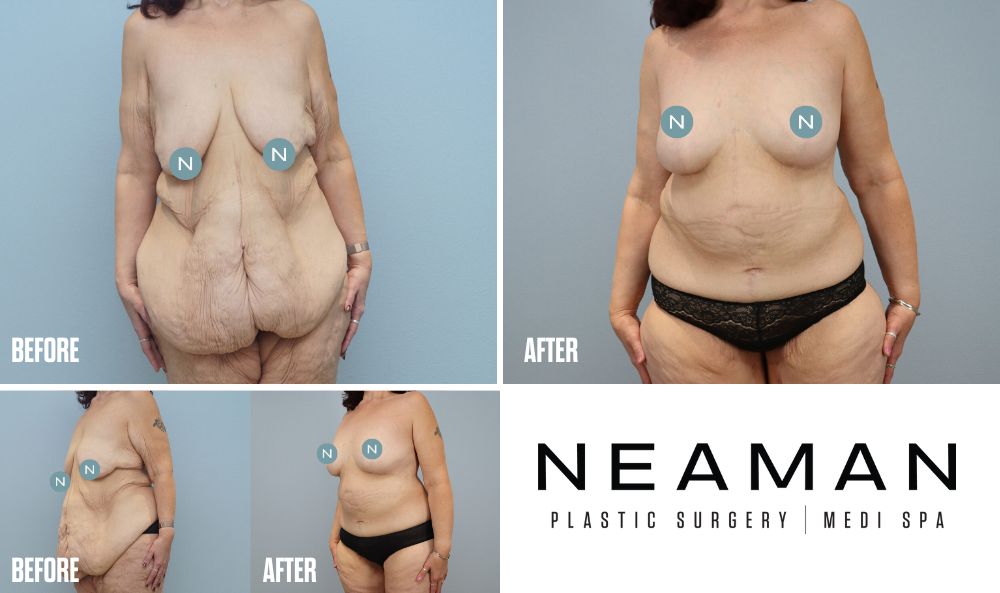
Areas Most Commonly Affected by Loose Skin After Ozempic
Many patients come to us after reaching their weight loss goals, looking to address the physical changes that rapid fat loss can bring, including:
- Face & Neck: Hollowed cheeks, skin sagging, and jowling
- Abdomen: Excess skin in the lower belly
- Upper Arms: Loose skin under the arms
- Thighs: Sagging skin on both the inner and outer thighs
- Breasts: Loss of volume and shape
Surgical Options for Loose Skin After Ozempic Weight Loss
At Neaman Plastic Surgery, we offer a range of surgical procedures designed to sculpt, lift, and refine your body after significant weight loss.
- Tummy Tuck (Abdominoplasty): Tightens the abdominal wall while removing excess skin for a smoother, flatter contour.
- Arm Lift (Brachioplasty): Removes excess skin from the upper arms to restore tone and balance.
- Thigh Lift: Smooths the inner and/or outer thighs for a sleeker leg contour.
- Breast Lift or Augmentation: Restores lost volume and repositions breast tissue for a lifted, youthful shape.
- Facelift or Neck Lift: Addresses facial and neck sagging for a rejuvenated appearance.

In many cases, combination procedures may be recommended to maximize your transformation while minimizing overall recovery time. For real examples of how our procedures have helped patients like you, visit our gallery to explore weight loss surgery before-and-after transformations.
Are There Non-Surgical Options for Loose Skin?
Non-surgical treatments can address a small amount of loose skin, but they have limitations. After significant weight loss, non-surgical options cannot remove excess skin. Instead, they work by stimulating collagen production to improve your skin’s firmness and texture.
Some non-surgical skin tightening options at Neaman Medi Spa include:
- Exilis Elite body skin tightening, which uses ultrasound and radiofrequency waves to stimulate collagen production and liquefy unwanted fat cells.
- CoolSculpting Elite, which uses cryolipolysis to freeze and kill fat cells.
- Emsculpt body toning, in which radiofrequency heating helps tighten and contract skin.
Non-surgical treatments may also be used as a complement to surgery, either before or after a body contouring procedure, to support skin quality and healing. If you’re interested in a non-surgical option but unsure of which one is right for you, you can schedule a consultation to talk through your options.
When Is the Right Time to Consider an Ozempic Makeover?
For patients who want to address a significant amount of loose or sagging skin, surgical treatment is usually the most effective option for achieving a more refined body shape.
Certain factors can help determine whether you’re ready for an Ozempic makeover. During your consultation, your surgeon will look at whether you:
- Have maintained a stable weight for 3–6 months before surgery.
- Are in good general health and cleared for anesthesia.
- Have a realistic understanding of the recovery process.
- Are focused on the areas that most affect your silhouette or confidence.
Our board-certified team will work closely with you to create a surgical plan that aligns with your lifestyle, recovery goals, and aesthetic priorities.
What to Expect: Recovery & Results
While every recovery journey is unique, patients often describe this process as deeply rewarding, both physically and emotionally. Here’s a general overview of what recovery can look like, depending on the procedures performed:
- Tummy Tuck or Body Lift: 2–4 weeks off work, compression garments for 6+ weeks
- Arm or Thigh Lift: 1–2 weeks downtime, mild to moderate swelling
- Facelift or Neck Lift: 2–3 weeks downtime, visible bruising fades within 2 weeks.
- Breast Lift: Back to light activity in 7–10 days, full recovery within 6 weeks
As swelling subsides and results take shape, many patients experience a renewed sense of confidence as their post-weight-loss body comes into focus.
Real Patient Stories
Ozempic and similar medications have empowered thousands of patients to take control of their health and their bodies. But weight loss is just the first chapter.
If you’re living with excess skin after weight loss, we invite you to explore the next step in your journey. Book a private consultation or take our virtual quiz to find out which procedures may be right for you.
Book a private consultation today to discover which options may be right for you.
Frequently Asked Questions
Mild loose or saggy skin may improve slightly as the body adjusts, especially in younger patients with good skin elasticity. However, excess or hanging skin typically doesn’t go away without treatment.
An Ozempic makeover is customized to each patient and may include procedures such as a tummy tuck, arm lift, thigh lift, body lift, or breast surgery. The goal is to remove excess skin and restore your natural body contours after weight loss.
Most surgeons recommend waiting until your weight has stabilized for several months before pursuing surgery. This helps ensure a safer procedure and more predictable, long-lasting results.