English
 Español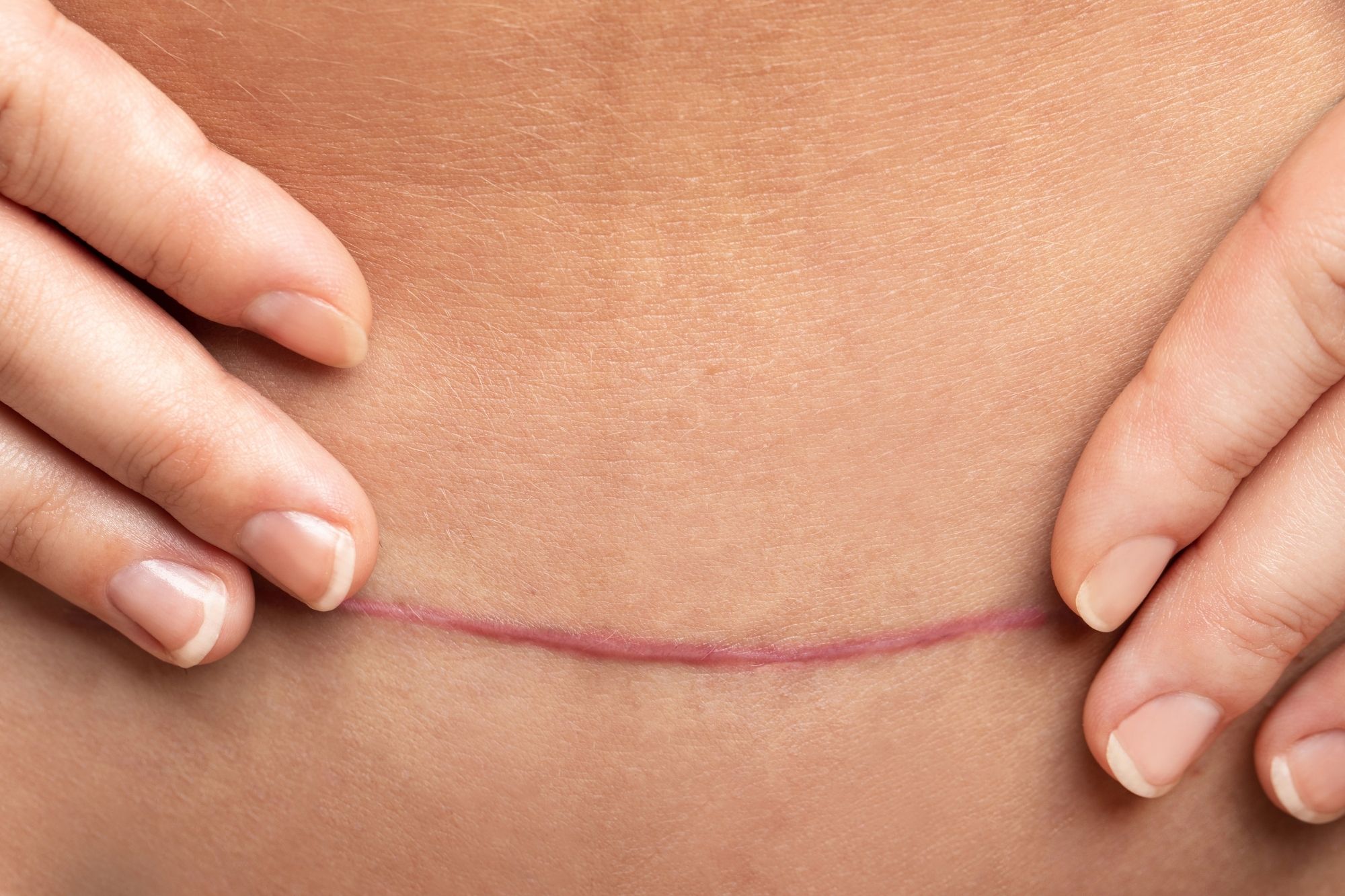
Posted on 26 May 2016
Updated April 30, 2026
If you have any type of surgery that involves an incision, like a tummy tuck, a scar is naturally going to form where the incision was closed. This new scar tissue is formed from myofibroblasts and collagen fibers, which are produced by your body in response to the injury. The process your scar goes through to heal involves several different phases, but the typical end result is somewhat flat and pale, continuously faded as the months go by. In fact, after several years, many scars eventually become undetectable to the naked eye.
Unfortunately, some types of tummy tuck scars follow a more aggressive path and can become more noticeable with time. When the body produces too much collagen in an effort to repair the damage, it can result in a ‘raised’ scar. These undesirable scars are known as hypertrophic scars and keloids.
Both types of scars can be unsightly, but keloids tend to be more pronounced and dramatic as they take on a cauliflower-like look. While keloids are rarer than hypertrophic scars, they are also much harder to treat. To properly treat either scar type, it’s important to correctly diagnose whether it’s a hypertrophic or keloid scar. Let’s learn more about these raised scars, as well as some ways you and your surgeon can help prevent them.
HYPERTROPHIC SCARS
Hypertrophic scars can develop in wounds that were closed under high tension. This means that when the incision was sewn shut, the wound closure was stretched tight. This is most common in areas where there is a lot of movement. High tension can cause the scar to expand and become thicker. Wounds that are sutured at deeper layers typically have lower tension. Wounds that are closed only at the surface usually have a higher amount of tension.
Symptoms and Appearance
Hypertrophic scars usually occur within 4-8 weeks following a plastic surgery procedure. The original scar becomes raised, but the borders of the scar do not extend beyond the original wound closure margins. In most cases, hypertrophic scars are linear. These scars can resolve with conservative pressure therapy and with time. If that doesn’t work, they can also be surgically removed.
How common are hypertrophic scars?
40-70% of the general population are likely to develop a hypertrophic scar after a surgical procedure. While this sounds high, there are varying degrees of hypertrophy, and some scars are more acceptable than others.
KELOIDS
Keloids are irregular-looking scars that form after an injury or surgical procedure. Simply put, a keloid is an unsightly scar that oversteps its original borders.
The scar will not only be raised, but it will also bubble up beyond the original incision outline. Although there are ways to reduce the appearance of keloid scars, they’re more difficult to eliminate than hypertrophic scars.
Symptoms and appearance
A keloid scar has a raised and bumpy appearance that extends past the original scar. In many cases, a keloid can have a cauliflower-like appearance. Keloids might form immediately after the injury or procedure, but can also occur months or even years later.
Incidence
Keloids have a very small incidence among the general population, but dark-skinned individuals are much more susceptible. Keloids have an incidence rate of 6-16% in African populations. Family history is a huge predictor of developing keloids, so anyone with a family history of keloids should be sure to mention it to their plastic surgeon prior to their procedure.
HYPERTROPHIC SCAR VS. KELOID SCAR
While both scar complications can create cosmetic concerns, there are a few differences worth noting.
What is the main difference between a hypertrophic vs keloid scar?
While a hypertrophic scar is thick and raised, it looks different from a keloid because it does not extend beyond the original margins of the wound. The hypertrophic scar is usually linear, whereas the keloid scar is irregular and cauliflower-like.
Which procedures can cause hypertrophic scars or keloids?
Both of these scars can develop following any procedure where an incision is made. This not only includes procedures with longer incisions, such as the abdominoplasty, but also includes any type of ‘lift procedure’, such as breast lifts, body lifts, face lifts, and lip lifts.
Mini vs. Full Tummy Tuck Scars
The two types of tummy tucks– mini and full– involve two different sizes of scars. This has a lot to do with the final appearance of your abdominoplasty scar and your chances of developing a hypertrophic scar or keloid.
| Mini Tummy Tuck | Full Tummy Tuck | |
| Incision size | Shorter, usually a few inches long | Longer incision that extends hip to hip |
| Incision placement | Low on the abdomen, just above the pubic bone | Across the entire lower abdomen, plus a second incision made around the belly button |
| Visibility | Easily hidden beneath underwear or swimwear | Usually hidden, but more extensive due to length and belly button scar |
How Surgeons Minimize Scars
When an incision is freshly closed with sutures, that closure inherently has ‘tension’ at the closure point. This refers to the forces that naturally want the wound to open back up. In order to reduce tension at the surface of the incision, a surgeon can close the wound with several (deeper) layers, so that the tension (the pulling) is distributed deeper down. This allows the incision at the surface to have the least amount of tension on it. With less tension on the wound, there is less trauma and inflammation on the scar.
In all of our tummy tuck and body lift procedures, we close incisions using the Lockwood technique. This technique uses deep wound closure techniques that result in the least amount of tension at the wound closure on the surface.
Following tummy tucks and body lifts, all of our patients are instructed to wear compression garments around the clock for at least 14 days. Compression helps greatly to keep post-operative swelling to a minimum. When swelling is at a minimum, the scar is less inflamed and has better vascularity. When there is more blood supply and better vascularity, wounds have a better chance of healing without hypertrophic scars and may also help with keloids.
SCAR TREATMENT OPTIONS
Pressure therapy has been the preferred conservative management for both the preventive case and treatment of surgical scars since the 1970’s. In layman’s terms, consistently wearing your compression garments is one of the best proven ways to prevent scars from forming.
In addition, scars can be treated and prevented using:
- steroid injections
- silicone gel sheeting
- Radiotherapy
- laser resurfacing
- flavonoids (Madera skin care gel)
- regenerative technology
- peptide therapy
- surgical intervention
- massage
Lastly, there are a number of emerging therapies being developed to treat keloids. These include intralesional injections with chemotherapy agents such as Bleomycin and 5-Fluorouracil.
Tummy Tuck Scar Healing Timeline
Tummy tuck scars don’t heal overnight, but they do improve significantly with time. Understanding what to expect at each stage can help you feel more confident during the healing process.
Weeks 1-2: Early Healing
During the first couple of weeks, your incision is still fresh. The area will probably look red, slightly raised, and feel tight or tender. This is a normal part of the body’s initial healing phase as collagen begins to form.
Swelling is also common at this point, which is why compression garments and proper aftercare play an important role in supporting healing.
Weeks 3-6: Proliferation
As your body continues to repair the incision, the abdominoplasty scar can become more noticeable before it improves. It might look darker, thicker, or slightly raised as collagen production peaks. Don’t worry– this is a normal part of healing and nothing to worry about! At this stage, your surgeon might recommend scar treatments like silicone sheets or gels to help the healing process.
Months 2-6: Remodeling
Over the next few months, your scar starts to soften and flatten. The redness fades and the scar becomes less prominent.
Even though the scar starts looking better, it’s still considered immature at this point, so you need to protect it from the sun and continue scar care.
Months 6-12: Maturation
By this stage, most tummy tuck scars have significantly faded. They get flatter, lighter, and closer in color to the surrounding skin.
It can take up to a year– or even longer– for your scar to reach its final appearance. A lot of scars become subtle enough to naturally blend in or hide under your clothes.
Preventing Scars After Tummy Tucks
Scarring is always a concern for patients wishing to undergo a plastic surgery procedure to address other concerns. We tend to see very few hypertrophic scars, likely because of the suturing technique noted above and our patients’ commitment to following their post-op instructions. While those factors may also help with preventing keloids, family history is more of a predictor for those and we have been successful in treating those for patients who had them occur.
Should scarring complications occur following your surgery, be sure to discuss them with your surgeon since proper diagnosis is imperative for determining the best course of treatment!
Contact Neaman Plastic Surgery today if you’re wanting more information or considering a Tummy Tuck Surgery.
Frequently Asked Questions
Will my tummy tuck scar show in a bikini?
In most cases, your tummy tuck scar won’t show in a bikini. The incision is usually placed low enough on the abdomen so it can be hidden under your swimwear or underwear. Even though a full tummy tuck creates a longer scar, it’s still positioned with clothing in mind.
How long does it take a tummy tuck scar to fade?
Tummy tuck scars usually take 6-12 months to noticeably fade, but every person’s skin is different, so there’s no set timeline.
What can improve scar healing?
To support optimal scar healing, it’s important to follow your post-op instructions, wear compression garments, and minimize tension on the incision. Treatments like silicone sheets can also help improve the appearance of scars.

Dr. Keith Neaman
Dr. Neaman is a board-certified plastic surgeon that specializes in surgical body contouring. He prides himself on being on the cutting edge of plastic surgery. He takes an informative approach to each consultation, and through open dialogue and communication, he helps his patients decide on a treatment plan that meets their needs.